
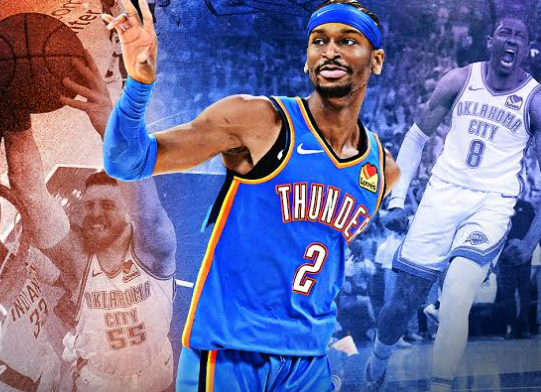
Oklahoma City Thunder Are Building a New Model for NBA Success
PrimeSportNews | 24 November 2026
immigrationcases.org/
The Oklahoma City Thunder have become one of the NBA’s clearest examples of how a team can build sustained success without relying on a single blockbuster signing. Their rise has been driven by a connected strategy: accumulate draft assets, identify versatile talent, develop players internally and build a team whose defensive standards can survive changes in personnel.
That approach has already produced elite results. Oklahoma City finished the 2025–26 regular season with a 64–18 record, the best mark in the Western Conference, before losing to the San Antonio Spurs in the conference finals. The result showed both the strength of the Thunder’s foundation and the difficulty of remaining at the top in a competitive league. (Source: NBA.com’s 2026–27 Oklahoma City season preview.)
A long-term rebuild built around assets and patience
The Thunder’s model did not emerge overnight. General manager Sam Presti and the front office spent years prioritising flexibility, future draft selections and young players with room to grow. Rather than treating every season as a demand for immediate results, the organisation built a pipeline of talent and preserved options for future roster decisions.
Draft capital matters because it gives a front office more than one route to improve. A team can select a prospect, trade picks for an established contributor or use its assets to move around the draft. Oklahoma City’s 2026 draft activity again reflected that flexibility: the club entered the draft with multiple selections and ultimately added centre Aday Mara, guard Otega Oweh and guard Bennett Stirtz through its offseason moves. (Source: NBA.com’s 2026 Thunder draft profile.)
The broader lesson is that rebuilding is not simply about collecting young players. It is about maintaining a clear evaluation system and giving the organisation enough time to turn potential into dependable NBA production.
Player development turns potential into depth
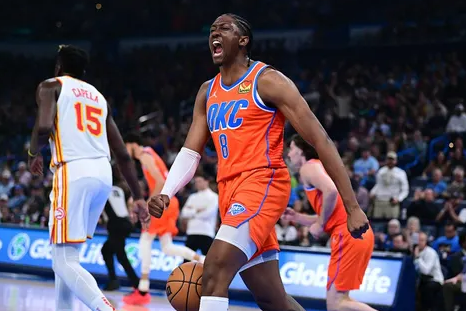
A strong development system is essential to the Thunder’s approach. Oklahoma City has repeatedly relied on players beyond its headline stars to contribute meaningful minutes. That depth helps the team maintain its style when injuries, matchups or roster changes alter the rotation.
The challenge becomes especially important as young players move from limited roles into larger responsibilities. Ajay Mitchell and Jared McCain were identified as players expected to take on expanded roles entering 2026–27, while the return of Jalen Williams offered a major boost after an injury-affected previous campaign. NBA.com’s season preview also highlighted Mitchell’s progress after he increased his production and playing time in 2025–26. (Sources: NBA.com season preview; Associated Press report on Sam Presti’s offseason comments.)
This approach creates internal competition and gives the coaching staff several options. It can also reduce the pressure to find an expensive replacement every time a rotation player leaves. The risk, however, is that development is never guaranteed: a young player may need more time, struggle with consistency or fail to translate practice progress into playoff-level performance.
A defensive identity that supports the whole roster
Oklahoma City’s defensive identity has been one of the most important foundations of its success. The team has built around length, mobility, anticipation and the ability to switch across different types of opponents. Those qualities allow the Thunder to disrupt passing lanes, contest shots and create transition opportunities.
A defensive system also gives a team a repeatable standard. Scoring can fluctuate from night to night, but communication, effort and positioning can remain central to the way a group competes. The Thunder’s front office has continued to prioritise players who can defend multiple positions and protect the rim, a preference reflected in its draft profile and roster construction.
The loss of Lu Dort, a prominent perimeter defender, is a significant test of that identity. Oklahoma City also moved on from Isaiah Joe and Aaron Wiggins in offseason transactions designed in part to address salary constraints. The organisation must now determine whether its remaining players can absorb those minutes without weakening the defensive foundation. (Source: Associated Press: Presti discusses the Thunder’s offseason changes.)
Star power matters, but the supporting cast matters too
Every championship contender needs elite talent. Shai Gilgeous-Alexander gives Oklahoma City a proven offensive leader, while Jalen Williams and Chet Holmgren provide complementary skills on both ends of the floor. The combination offers scoring, playmaking, size and defensive versatility.
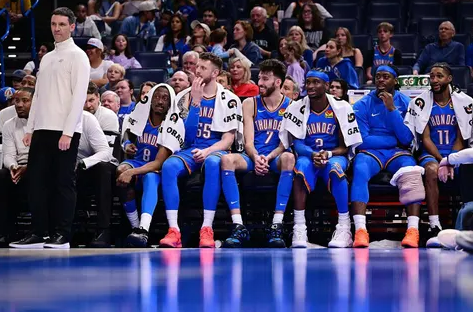
The model works because the stars are supported by a roster designed to fit together. A team does not need every player to dominate the ball. It needs role players who can defend, make quick decisions, space the floor and perform within a shared system. That balance can make a roster more resilient than one built around several high-usage scorers with overlapping strengths.
Still, star availability remains decisive. Williams missed a large portion of the 2025–26 season, according to the Associated Press report on the team’s offseason, and injuries can quickly expose weaknesses in even a deep roster. Oklahoma City’s long-term planning cannot eliminate that uncertainty.
Financial discipline is becoming part of the competitive strategy
The NBA’s salary-cap system increasingly shapes how successful teams stay together. Oklahoma City’s offseason showed that even a young, winning team must make difficult choices when payroll thresholds and roster-building restrictions come into play.
Presti acknowledged that the Thunder would look different after the departures of Dort, Joe and Wiggins. The Associated Press reported that the moves helped the club get below the league’s second-apron threshold, which carries strict payroll and transaction restrictions. Presti also stressed that the organisation must adapt rather than assume that last season’s formula can simply be repeated.
This is a central part of the Thunder’s model: financial flexibility is not separate from basketball strategy. It affects which players can be retained, which contracts can be moved and how the team replaces lost production. The challenge is to preserve the quality of the rotation while avoiding a payroll structure that limits future choices.
The next test: proving the model can last
Oklahoma City’s blueprint is attractive, but it is not a guaranteed shortcut to championships. Draft picks can miss, young players develop at different speeds, key contributors become expensive and rivals improve. A successful regular season also does not ensure success in a seven-game playoff series.
The Thunder’s 2026–27 season is therefore an important test. The team enters the campaign with an established core, a strong recent record and new responsibilities for players moving up the rotation. It must show that its defensive identity and collective approach can withstand personnel changes and the pressure of another deep postseason run.
Other NBA organisations can learn from Oklahoma City’s emphasis on patience, internal development, defensive versatility and asset management. The most valuable lesson is not that every team should copy the Thunder’s exact roster moves. It is that long-term success requires alignment between scouting, coaching, player development and financial planning.
The Oklahoma City Thunder are building more than a talented lineup. They are trying to create an organisation that can keep competing as players, contracts and league conditions change. If that structure continues to deliver, it may become one of the defining models of modern NBA team-building.
Next Article
– FIFA’s $20 Billion World Cup Sell-Off Collapsed in Days: What It Reveals About Football Governance
–After Messi and Ronaldo: How Football’s Business Is Hunting for Its Next Global Star
–LeBron James Keeps Making History: How Much Longer Can the NBA Legend Compete